Prebiotic Potential: Using Turkish Dried Figs for Digestive Health Formulations
Volume I: The Geopolitics of Quality, Microbiome Mechanics, and the Unmatched Biological Superiority of the Anatolian ‘Sarilop’ Variety.
In the intricate world of functional ingredients, geography is destiny. Just as Champagne can only come from France, the world’s finest dried figs are the exclusive heritage of Turkey. We are not discussing a mere commodity; we are discussing the “Gold Standard” of the prebiotic world.
The modern food industry is shifting. Consumers are rejecting synthetic fibers and demanding “Digestive Wellness” from whole-food sources. For the R&D Scientist, this presents a challenge: How to formulate for gut health without sacrificing texture?
This 5-part technical dossier argues that the answer lies in the Meander Valley of Turkey. Here, the Turkish Dried Fig (Ficus carica, variety: Sarilop) reigns supreme—not just as a fruit, but as a complex bioactive matrix that outperforms isolated fibers in both efficacy and industrial functionality.
1. The Anatolian Monopoly: Why Turkey Leads
To understand the quality of the ingredient, one must respect its origin. Turkey is not merely a participant in the dried fig market; it is the undisputed global hegemon. Producing over 55% of the world’s supply and setting the pricing benchmarks for the entire planet, Turkey is to figs what Silicon Valley is to technology.
The “Terroir” Advantage
The microclimate of the Aydın and İzmir provinces is biologically unique. The convergence of humid sea breezes from the Aegean and dry heat from the Anatolian plateau creates an environment that cannot be replicated in California, Spain, or Greece. This “Terroir” results in a fig with thinner skin, higher fructose stability, and a denser phenolic profile than any other origin.
2. Botanical Superiority: The ‘Sarilop’ Genetics
Industrial buyers often make the mistake of treating figs as a generic commodity. This is a scientific error. The Turkish Sarilop variety possesses structural advantages that make it the only logical choice for high-throughput manufacturing.
A. The “Paper-Thin” Skin Architecture
The Problem with Competitors: Varieties like the ‘Mission’ (USA) or ‘Calabacita’ (Spain) have thick, leathery skins. When ground into a paste, these skins create tough, gritty particles that ruin the mouthfeel of a soft bar.
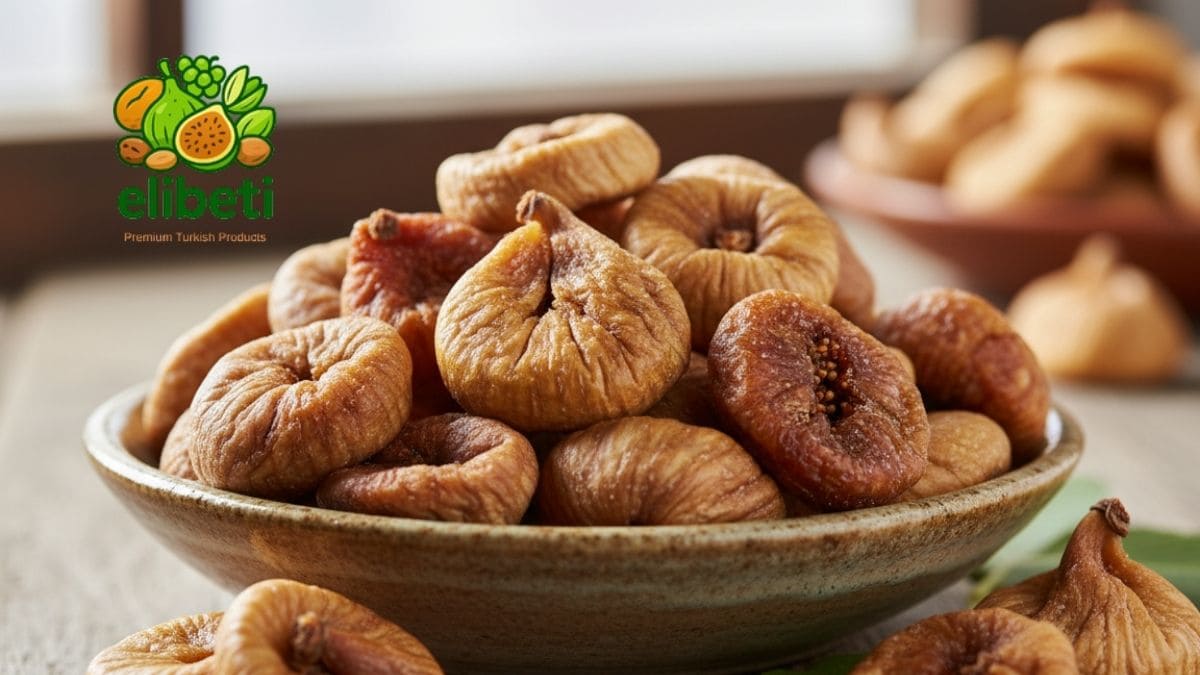
The Turkish Solution: The Sarilop has a skin so genetically thin that it becomes translucent upon drying.
Industrial Benefit: In the grinder, the skin disintegrates completely. This allows manufacturers to utilize the entire fruit (Zero Waste) while achieving a texture as smooth as premium caramel.
B. The Science of Caprification (The “Crunch”)
Texture is a flavor. The unique sensory profile of Turkish figs comes from a mandatory biological event: Caprification (Pollination).
Unlike parthenocarpic (seedless) varieties grown in other regions, Turkish Sarilop figs are fertilized by the Blastophaga psenes wasp. This results in the formation of thousands of fertile, full nutlets (seeds) inside the fruit.
Why R&D Loves It: When a consumer bites into a product made with Turkish Fig Paste, they feel a distinct “pop” and “crunch.” Psychologically, this signals “Real Fruit,” “Freshness,” and “Fiber,” creating a premium perception that mushy, seedless pastes cannot compete with.
3. Microbiome Mechanics: The Biochemistry of Fermentation
To formulate effectively, we must move beyond the generic label of “Fiber” and understand the specific biochemical transaction occurring in the colon. We do not add Turkish figs to a formulation simply for bulk; we add them to engineer a specific metabolic outcome: The production of Short-Chain Fatty Acids (SCFAs).
A. The “Fuel” Source (Pectin & Cellulose)
The Sarilop fig presents a dual-action fiber matrix that is rare in nature:
1. Soluble Fiber (High-Methoxyl Pectin): Found in the amber flesh. This is the primary fuel for beneficial bacteria (Bifidobacteria and Lactobacilli).
2. Insoluble Fiber (Cellulose/Lignin): Found in the skin and seeds. This provides the structural scaffold that carries the prebiotic payload deep into the distal colon.
B. The “Payoff”: SCFA Synthesis
When the gut microbiota ferments the pectin from Turkish figs, it yields three critical metabolites that define “Gut Health”:
This is the most sought-after molecule in modern nutrition. Butyrate serves as the primary energy source for colonocytes (colon cells). Turkish fig pectin is highly butyrogenic, directly supporting the regeneration of the gut lining and preventing permeability (“Leaky Gut”).
Once produced, Propionate is absorbed into the bloodstream and travels to the liver. Clinical studies suggest it inhibits cholesterol synthesis and stimulates the release of satiety hormones (GLP-1), offering a powerful “Weight Management” angle for fig-based products.
4. The “Comfort” Factor: Solving the Gas Problem
Here is the critical differentiator for the R&D Director: Not all fermentation is good fermentation.
Many “High Fiber” bars on the market use isolated fibers like Inulin (Chicory Root) or FOS (Fructooligosaccharides). While effective, these simple chains ferment extremely rapidly in the proximal colon.
The Result: Rapid gas production (CO₂ and H₂), causing bloating, pain, and consumer rejection.
The “Slow Release” Advantage of Sarilop Figs
The Turkish Fig is a complex botanical structure, not a refined powder. The bacteria must work harder to break down the cell walls of the fig flesh.
This results in “Sustained Fermentation” (Slow Release).
The Engineering Benefit: The prebiotic activity is distributed across the entire length of the colon (Proximal to Distal). Gas production is gradual and manageable. This allows you to formulate a “High Fiber” product that is actually comfortable to eat, avoiding the infamous “fiber bloat” associated with synthetic competitors.
5. Chemical Composition: The Functional Matrix
To the consumer, a fig is a fruit. To the food scientist, it is a biomaterial composed of specific ratios of complex carbohydrates, fibers, and minerals. Understanding this matrix is essential for predicting how the ingredient will behave in a complex formulation like a protein bar or a probiotic yogurt.
A. The Fiber Spectrum (9.8% Total Fiber)
Turkish dried figs are characterized by one of the highest fiber densities in the fruit kingdom. However, the ratio of fiber types is what dictates functionality.
Primary Component: High-methoxyl Pectin.
Physiological Function: Forms a viscous gel in the gut, slowing gastric emptying and moderating the glucose spike.
Industrial Function: Acts as a natural binder. The native pectin helps hold bar ingredients together, reducing the need for synthetic gums.
Primary Components: Cellulose, Hemicellulose, Lignin (found in Seeds/Skin).
Physiological Function: Increases fecal bulk and accelerates transit time (regularity).
Industrial Function: Provides the structural “skeleton” of the paste, preventing it from becoming a runny liquid under heat.
B. Mineral Density: The “Dairy-Free” Calcium Source
One of the most underutilized marketing angles for Turkish figs is their calcium content.
The Data: 100g of dried figs contains approximately 162mg of Calcium.
This is functionally equivalent to the calcium density of fluid milk by weight. For Plant-Based/Vegan product developers, fig paste offers a rare opportunity to claim “Source of Calcium” naturally, without adding chalky Calcium Carbonate or Tri-calcium Phosphate to the recipe.
6. Food Physics: Rheology & Shelf-Life Engineering
Beyond nutrition, the physical properties of the fig dictate its performance on the production line. We must examine Water Activity (aw) and Hygroscopicity.
A. The Humectancy Mechanism (Natural Softener)
In bakery applications (cookies, biscuits, soft-baked bars), the enemy is “Staling”—the retrogradation of starch and moisture loss.
The Science: The sugar profile of Turkish dried figs is dominated by Invert Sugars (Glucose and Fructose: ~50-55%), with very little Sucrose. Fructose is highly hygroscopic (water-loving). It chemically binds water molecules, preventing them from evaporating.
Replacing 15% of the sucrose (table sugar) in a cookie recipe with Turkish Fig Paste significantly lowers the Water Activity (aw) while maintaining the perception of moistness.
Result: The cookie remains soft and chewy for 6-9 months instead of 3, without using artificial humectants like Glycerol or Sorbitol. This is the definition of “Clean Label Engineering.”
7. Comparative Analysis: Turkey vs. The World
Why specify “Turkish Sarilop” on your spec sheet? Why not generic “Dried Figs”? The difference is measurable in the laboratory and affects the final product quality.
| Parameter | 🇹🇷 Turkish Sarilop | 🇪🇸 Spanish Calabacita | 🇺🇸 US Mission | Industrial Impact |
|---|---|---|---|---|
| Skin Structure | Ultra-Thin (Dissolves in paste) |
Thick / Leathery | Medium / Dark | Thick skin creates unwanted “gritty” particles in smooth fillings. |
| Seed Ratio | High / Fertile (Distinct Crunch) |
Moderate | Low / Often Hollow | A high fertile seed count mimics the texture of expensive berries. |
| Sugar Stability | High Fructose (Soft & Chewy) |
Variable | Lower Moisture | Sarilop maintains softness longer in open-air exposure. |
8. The Safety Shield: Advanced Aflatoxin Protocols
We must address the elephant in the room: Food Safety. Because figs dry naturally on the tree under the Mediterranean sun, they are biologically susceptible to mold formation (Aspergillus flavus) if late-summer humidity spikes. This mold can produce Aflatoxin.
The Turkish Advantage: While other origins (like North Africa or the Middle East) often struggle with rudimentary sorting, Turkey has turned Aflatoxin control into a high-tech science. The Turkish industry implements the world’s most rigorous “Photonics-Based” safety net.
A. The UV-Sorting Technology (365nm)
Aflatoxin itself is invisible to the human eye. However, the mold produces a metabolite (Kojic Acid) that reacts to specific wavelengths of light.
The Protocol:
Every single industrial-grade fig exported from reputable Turkish suppliers passes through “Dark Rooms” illuminated by high-intensity UV lamps (365nm wavelength).
The Mechanism:
1. Clean Fig: Appears Dark Purple (absorbs light).
2. Contaminated Fig: Glows with a Bright Blue-Green Fluorescence.
Advanced optical sorters (Laser Scanners) and trained technicians instantly remove any glowing fruit. This process is 99.9% effective in eliminating high-risk figs from the supply chain before they are ever ground into paste.
Some buyers attempt to save 10-15% on cost by purchasing “Farm Grade” or “Field Run” figs for processing.
Do not do this. These figs have NOT been UV-sorted. If you process unsorted figs into a paste, one single contaminated fig can distribute Aflatoxin throughout a 1,000kg batch, causing a global recall.
The Golden Rule: Always specify “Industrial Grade – UV Sorted & Laser Scanned” on your contract. Rely on the Turkish processing expertise to protect your brand.
B. Compliance Limits (EU vs USA)
Turkish exporters are experts in navigating complex regulatory environments. Most major facilities are BRC/IFS certified and can guarantee compliance with the strictest standards:
- European Union (The Strictest): Max 4ppb Total Aflatoxin / 2ppb B1 (for direct consumption).
- USA (FDA): Max 20ppb Total.
- Canada / Japan: Max 10-15ppb Total.
9. Engineering the Line: Selecting the Right Format
Choosing the correct physical format is as important as safety. Turkish Sarilop figs are naturally high in reducing sugars, which makes them sticky. Selecting the wrong format can clog your production line.
A. Fig Paste (The Binder)
- Type A (Whole Seeds): Standard. Provides crunch and visual authenticity. Best for fruit bars.
- Type B (Ground Seeds): Passed through a colloid mill. Seeds are crushed. Best for smooth fillings and yogurts.
B. Diced Figs (The Flow Problem)
The Challenge: If you put 500kg of raw diced figs into a hopper, they will compress into a solid block.
The Solution: Specify a 3-5% Rice Flour Coating. This acts as a flow agent, ensuring the cubes separate freely in automated mixers (Muesli/Granola lines).
10. Advanced Formulation: The Sugar Replacement Algorithm
The most common request from R&D directors is: “Remove the High Fructose Corn Syrup (HFCS) and Refined Sugar, but keep the texture moist.”
Turkish Fig Paste is not a simple 1:1 substitute for sucrose; it is a complex ingredient system. To formulate correctly, we must calculate based on Total Solids.
Target: Replace 100kg of Refined Sugar/Syrup in a soft cookie or bar recipe.
The Solution: Use 120kg of Turkish Fig Paste.
The Engineering Logic: Fig paste has a moisture content of approx 20-22%. You need the extra mass to match the dry solids content of the sugar you removed.
The Benefit: You do not need to add extra water to the dough. The water inside the fig paste is “bound water,” meaning it hydrates the flour without significantly increasing the Water Activity (aw). This prevents mold growth while keeping the crumb soft.
11. Application Focus: Beyond the Bakery
While bakery is the traditional home of the fig, the most exciting innovations are happening in the Plant-Based Meat and Synbiotic Dairy sectors.
A. The Vegan Meat Analogue (The “Maillard” Agent)
Most vegan burgers look grey or unnaturally pink. Manufacturers often use artificial Caramel Color (E150) to fix this.
The Fig Solution: The natural dark amber pigments and reducing sugars in roasted fig paste participate in the Maillard Reaction upon grilling.
Result: The burger browns authentically on the grill. Additionally, incorporating 5-8% Whole Seed Fig Paste introduces “micro-texture”, simulating the bite of ground beef gristle.
B. Synbiotic Dairy Systems
Combining Figs (Prebiotic) with Yogurt/Kefir (Probiotic) creates a Synbiotic super-product.
The pH Advantage: Dried figs have a pH of 5.0–5.5. Unlike highly acidic citrus fruits (pH 3.0) which curdle milk proteins (Casein), figs are “Casein-Friendly.” They can be blended directly into Greek Yogurt bases without causing syneresis (water separation), allowing for a clean label without stabilizers like Xanthan Gum.
12. Regulatory Landscape: What Can You Claim?
The final step in product development is the label. Using Turkish Figs allows you to move away from “Artificial” warnings and towards “Health” claims.
Dietary Fiber: Figs qualify as a “source of dietary fiber.”
Added Sugar: While figs contain sugar, it is intrinsic. In many applications (like bars), pastes can be declared as “Fruit” rather than “Added Sugars” (consult legal counsel).
Digestive Health: “Fig contributes to the maintenance of normal intestinal function.” (Authorized Claim).
Nutrient Content: Claims like “High in Fiber,” “Source of Calcium,” and “Source of Potassium” are easily achievable.
13. Conclusion: The Clean Label Imperative
The food industry is pivoting. The days of masking poor nutrition with synthetic additives are ending. The future belongs to brands that can deliver functional benefits—like gut health—through recognizable, whole-food ingredients.
The Turkish Sarilop Fig is more than just a dried fruit. It is a dual-action prebiotic, a natural sweetener, a humectant, and a source of plant-based calcium. It is a multi-functional tool that solves the texture, flavor, and nutritional challenges of the modern R&D lab.
By integrating this ancient Aegean superfood into your formulations, you are not just buying an ingredient; you are investing in the “Gold Standard” of quality, safety, and history. The question is no longer “Why use figs?” but rather “Why use anything else?”
