
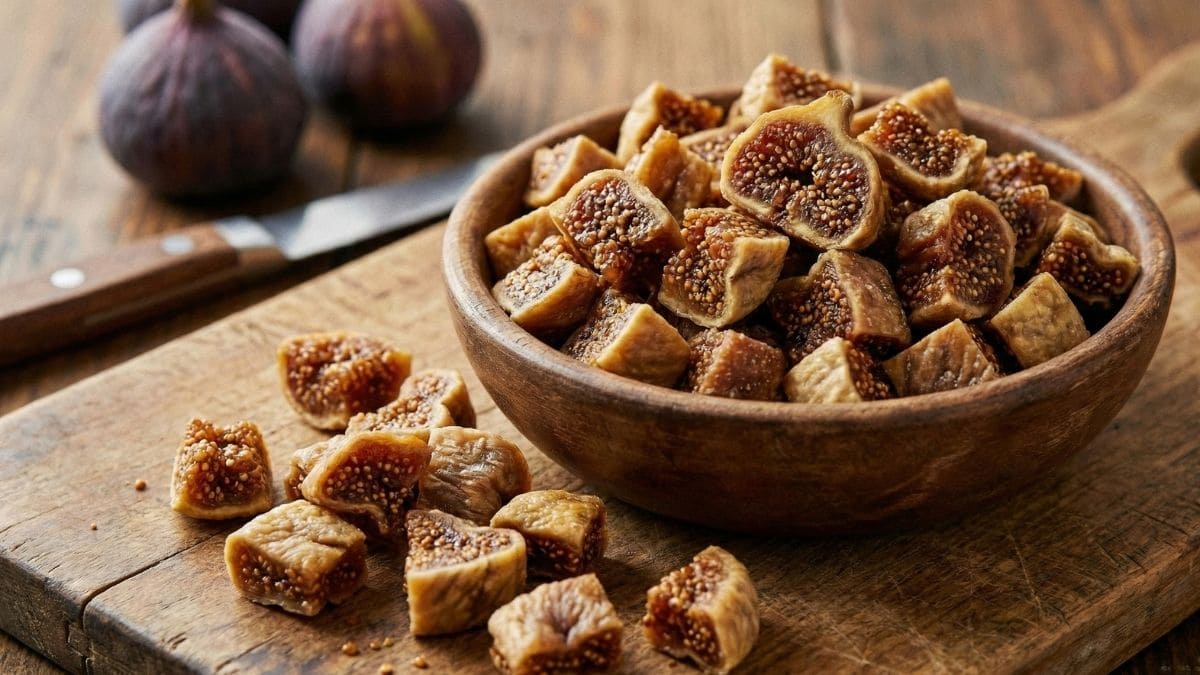
Diced Figs in Bread: Enzyme Activity and Dough Rising
A technical guide for Master Bakers. We analyze the proteolytic impact of Ficin enzymes on gluten networks and demonstrate why Turkish Sarilop Figs are the essential substrate for high volume bread production.
How do diced figs impact bread volume?
Diced figs impact bread volume primarily through Ficin which is a proteolytic enzyme that severs gluten bonds causing dough collapse. Unprocessed figs weaken the protein network resulting in dense gummy loaves. Industrial bakers overcome this by using thermally treated Turkish Sarilop Figs which offer deactivated enzymes and superior structural integrity ensuring consistent rise and crumb texture.
1. The Ficin Threat: Proteolysis Explained
Every experienced baker has likely encountered the Mystery of the Collapsing Loaf. You formulate a perfect recipe calculate the yeast activity and monitor the proofing temperature yet the dough fails. When you add raw figs the dough initially rises but then catastrophically sinks in the oven. This is not a failure of yeast but a biochemical attack on the protein structure.
Figs naturally contain high concentrations of a cysteine protease enzyme known as Ficin. In nature this enzyme serves as a defense mechanism for the fruit against pests. However in a bakery environment it acts as a silent destroyer. Ficin functions similarly to Bromelain in pineapples or Papain in papayas because its biological directive is to break down proteins into simple peptides and amino acids.
What makes Ficin particularly dangerous for bread production is its thermal stability profile. While yeast begins to die off at around 55°C Ficin remains highly active up to 65°C to 70°C. This means that during the initial stage of baking known as Oven Spring just when the gluten network needs to be strongest to hold the expanding gas the enzyme is working at maximum efficiency to cut that network apart.
2. Gluten Network Integrity and Collapse
To understand the magnitude of this problem we must look at the dough rheology. A healthy bread dough relies on a continuous three dimensional gluten network. This web traps the Carbon Dioxide gas produced by fermentation.
When active Ficin is present it severs the peptide bonds that hold this web together via a process called Proteolysis. The consequences in an industrial line are severe and costly.
📉 Loss of Gas Retention
As the gluten strands are cut they can no longer stretch. The gas bubbles burst and escape rather than expanding the loaf. This leads to a flat and dense product that fails to meet volume specifications on the production line.
💧 Wet and Gummy Crumb
The breakdown of protein releases water that was previously bound within the gluten structure. This results in a sticky raw feeling interior that never bakes through properly regardless of the oven time or temperature settings.
3. The Turkish Sarilop Advantage
Selecting the right raw material is an engineering decision. In the global dried fruit market the Turkish Smyrna which is botanically known as Sarilop stands as the undisputed gold standard for industrial baking applications. This dominance is rooted in the unique cellular architecture of the fruit grown in the Meander Valleys of Western Turkey.
When a Master Baker formulates a high hydration dough they need an inclusion that can withstand the intense mechanical shear of spiral mixers without disintegrating into a paste. This is where the High Dry Matter content of the Turkish fig becomes a critical asset for the formulator.
One of the most frequent consumer complaints regarding fruit breads involves texture. Varieties from other origins often possess a thick and leathery epidermis that refuses to soften during baking. These tough skins detach from the flesh and create an unpleasant papery mouthfeel. Turkish Sarilop figs are genetically distinct because they possess an exceptionally thin skin that virtually assimilates into the bread crumb during the baking cycle.
4. Thermal Deactivation Protocols
Raw figs straight from the tree are unsuitable for industrial baking due to the active Ficin enzyme we analyzed earlier. To render them safe for sensitive gluten networks professional suppliers in Turkey employ a rigorous multi stage processing protocol that transforms the raw agricultural commodity into a functional bakery ingredient.
The most critical step in the manufacturing of diced figs is thermal treatment. Before dicing the whole figs must undergo a controlled blanching or pasteurization process. The goal is to raise the core temperature of the fruit to a level where the protein structure of the Ficin enzyme denatures permanently. R&D managers must explicitly request this specification because using Raw Diced Figs might save a few cents but risks thousands of dollars in wasted dough batches.
5. Water Activity and Staling Dynamics
Beyond enzymes and texture there is a thermodynamic reason why Master Bakers prefer Turkish Sarilop figs. It concerns the management of shelf life through Water Activity aw. In a baked good staling is primarily caused by the retrogradation of starch molecules which expel water and return to a crystalline state. To delay this process formulators use humectants.
Turkish figs are naturally rich in invert sugars specifically glucose and fructose. These simple sugars are powerful humectants that possess the chemical ability to bind water molecules within the crumb structure. When you incorporate diced figs into a loaf you are essentially distributing thousands of microscopic moisture reservoirs throughout the dough.
A common failure in R&D is the Dry Crumb Syndrome which occurs when the moisture content of the fruit is significantly lower than that of the dough. Nature seeks equilibrium. If you add dry figs at 18% moisture to a bread dough at 45% moisture the fruit will aggressively suck water from the surrounding gluten network during the shelf life. The result is dry brittle bread and tough rubbery fruit. Always specify Conditioned Turkish figs with a moisture content between 24% and 26% to match the equilibrium relative humidity of the crumb.
6. Coating Technology and Flowability
Diced figs are naturally hygroscopic and sticky due to their exposed glucose content. If left untreated the cubes will agglomerate or clump together in the box forming a solid block that is impossible to feed into automatic dosing systems. To ensure Individual Quick Frozen IQF quality flowability at ambient temperatures manufacturers apply a functional coating agent immediately after dicing.
The industry standard is Rice Flour because unlike wheat flour it is gluten free and has a neutral flavor profile. It does not ferment easily and provides a dry barrier that keeps each cube separate allowing for precise dispersion throughout the dough. For applications where a clear appearance is required like transparent packaging Dextrose Monohydrate is utilized as it dissolves during baking leaving no white powdery residue.
7. Troubleshooting: The Engineering Matrix
Even with premium Turkish figs production anomalies can occur. This diagnostic section helps R&D managers identify root causes and implement corrective actions immediately without the need for complex lookup tables.
📉 Scenario A: The Collapsing Loaf
Symptom: The bread rises normally during proofing but sinks in the center during the oven spring phase.
Root Cause: Active Ficin enzyme. The thermal treatment of the figs was insufficient meaning the enzyme remained dormant at room temperature but became hyperactive as the dough temperature rose to 50°C in the oven cutting the gluten strands.
Corrective Action: Request a new Certificate of Analysis CoA from your supplier confirming Ficin deactivation. As a temporary emergency measure increase the acidity of the dough by lowering pH using sourdough culture which inhibits enzyme activity.
⚓ Scenario B: The Sinking Fruit
Symptom: A dense gummy layer of fruit at the bottom of the tin with large air pockets above.
Root Cause: Density Mismatch or Lubrication. The fruit is too heavy or the surface syrup has lubricated the dough allowing the fruit to slide through the gluten matrix.
Corrective Action: Verify the Rice Flour coating coverage to ensure friction. Add the figs at the very last minute of the mixing cycle to prevent surface damage. Increase the yield stress or viscosity of the batter to support the inclusion weight.
8. Logistics and Cost in Use Analysis
Procurement teams often evaluate ingredients based on price per kilogram but the true metric for industrial baking is Cost in Use. Cheaper alternative origins often contain higher levels of foreign material stems or hard skins which must be filtered out or risk consumer complaints.
Furthermore the high water holding capacity of Turkish Sarilop figs allows for a higher dough hydration rate. Since water is the cheapest ingredient in the bakery increasing hydration improves yield. A bread formulated with Turkish figs retains moisture longer reducing staling and waste at the retail level. When calculating the total cost including yield gain and waste reduction Turkish figs often emerge as the most economical choice despite a potentially higher initial invoice price.
📊 Strategic Production Outlook
Integrating diced figs into industrial bread lines is a challenge that rewards precision. It is not sufficient to simply select a flavor profile because the Master Baker must act as an engineer considering enzyme activity density dynamics and water activity equilibrium.
The Turkish Sarilop fig provides the ultimate solution to these challenges. Its unique thin skinned architecture and robust cellular structure allow it to survive the rigors of modern baking while delivering the authentic Mediterranean flavor consumers demand.
By specifying heat treated rice flour coated Turkish figs R&D managers eliminate the risks of loaf collapse and production waste. This ensures a consistent high volume product that commands a premium on the retail shelf. The future of fruit bread belongs to those who master the science of the substrate.
9. Frequently Asked Questions
In this section we address specific technical queries often raised by R&D teams during the reformulation process.
Does adding sourdough culture help with Ficin enzymes?
Yes it does. Ficin activity is pH dependent and thrives in neutral environments. By adding a sourdough starter or acidulant you lower the pH of the dough below 4.5. This acidic environment inhibits the proteolytic activity of the enzyme providing an additional safety buffer alongside the thermal treatment of the fruit.
What is the difference between Natural and Lerida figs for dicing?
For industrial dicing “Natural” figs are preferred over the “Lerida” or flattened types. Natural figs retain their spherical shape during drying which preserves the internal moisture balance. Lerida figs are mechanically manipulated which can damage the cellular structure and lead to higher sugar crystallization or sugaring on the surface making them less suitable for precision dicing.
Can I rehydrate the figs in boiling water before mixing?
We advise against boiling water. While heat is good for enzymes boiling water destroys the fruit texture and turns the cubes into mush. Instead we recommend a gentle warm soak at 30°C to 40°C if adjustment is needed or simply purchasing pre conditioned figs at 24% moisture which require no soaking and can be added directly to the mixer.
10. Procurement Specification Guide
To guarantee success on the production line R&D Directors should copy these parameters into their supplier tender documents. This ensures you receive a functional ingredient rather than a raw commodity.
✅ Origin Requirement: Turkey Sarilop Variety only.
✅ Enzyme Status: Thermally Deactivated or Blanching Step Confirmed.
✅ Moisture Content: Target 24% with a tolerance of plus or minus 2%.
✅ Coating Agent: Rice Flour at 3% to 5% for maximum flowability.
✅ Foreign Material: Free from stems stones and foreign objects with laser sorting confirmation.
✅ Microbiological: Yeast and Mold count below 1000 cfu/g to prevent spoilage in the finished bread.
Mastering the science of fruit inclusion requires precise control over enzymes and hydration. By following these protocols bakers can achieve consistent high volume loaves with the premium appeal of Turkish figs.

